
OCR7 + TWP P2P: 24/7 Operation Without Critical Dependencies in LPR
In the parking industry, there is one incident that no operations manager ever wants to face: the lane is blocked. Not because it is uncommon, but because, in a ticketless parking facility, its consequences unfold within minutes, and its impact is directly proportional to the level of automation achieved.
Imagine a typical day in a parking facility. Everything is operating normally. Vehicles enter and exit automatically. There are no tickets, no manual validations (ticketless management), no queues, and no waiting times.
Then, an LPR camera stops responding. Within minutes, queues begin to form at entry and exit points, calls start reaching the control center, operational incidents arise, and users become frustrated.
Most of the time, the issue is not the camera itself. Cameras can fail, just like any other technological device. The real problem appears when the entire operation depends on that device.
The rise of ticketless parking and its structural vulnerability
Ticketless systems have redefined parking management over the last decade. Eliminating physical tickets streamlines vehicle access, improves the user experience, reduces operating costs, and simplifies facility management.
In a ticketless environment, the license plate becomes the key. It is the reference used to identify vehicles, manage entries and exits, apply tariffs, and automate operations. Therefore, when an LPR system stops working, the impact is significantly greater than in a conventional parking installation.
The real cost is not the hardware: it is operational downtime
Returning to the previous example, when a camera fails, many parking operators focus their attention on the device itself. However, the real cost is rarely the hardware. The real cost is operational downtime.
Hardware costs are predictable, limited, and insurable. Operational disruption is not. Its consequences can be immediate:
- Vehicle queues at entrances and exits
- Users unable to access the facility automatically
- Increased calls to the control center
- Activation of manual contingency procedures
- Emergency maintenance interventions
- Documented operational incidents
- Measurable loss of efficiency
- Deterioration of the user experience
In a ticketless parking facility, a single incident can directly compromise daily operations for hours.
The relevant question is therefore not whether a camera can fail—every technological device can. The operational question is: what happens to the facility when it does?
The problem with hierarchical architectures: the redundancy illusion
Many LPR systems currently deployed still rely on hierarchical architectures. Even when multiple cameras are installed in a lane, they typically operate under a Master/Slave architecture in which a primary camera—or a central decision point—coordinates the system logic. The remaining LPR cameras function, in practice, as subordinate devices.
As long as everything works correctly, this dependency remains invisible. However, when that critical element stops responding, the entire operation can be affected, regardless of how many cameras have been installed.
In systems engineering, this is known as a Single Point of Failure (SPOF): a component whose failure causes the entire system to fail. Installing two or three cameras within a hierarchical architecture does not eliminate this risk. It merely disguises it.
If the entire logic still depends on a single element, the risk remains. True redundancy is not achieved by multiplying devices. It is achieved by eliminating critical dependencies.
TwinPlate P2P Master/Master: resilience by design
The technical answer to this problem is not to add more hardware under the same architecture. It is to change the architecture itself.
TwinPlate P2P Master/Master distributes operational logic across all system nodes. Unlike the traditional hierarchical model, there is no primary camera coordinating the others. Each camera acts as an autonomous intelligent node, capable of operating independently while simultaneously coordinating with the rest of the system.
No master camera. No fixed hierarchies. No single points of failure.
In this model, if one node stops responding, the system does not stop. The remaining cameras continue operating without interruption.
This type of architecture is especially critical for ticketless parking systems because it helps prevent:
- Interruptions in automatic vehicle access
- Exit management issues
- Increased support calls
- Manual validation requirements
- Loss of operational efficiency
The combination of OCR7 + TwinPlate P2P technology makes traditional ticketless systems obsolete by delivering faster and more reliable vehicle identification while significantly reducing the risk of lane-blocking incidents. This is achieved through a fully distributed Master/Master architecture that replaces conventional hierarchical Master/Slave models, eliminating single points of failure and ensuring continuous operation.
This configuration provides high availability and fault tolerance, ensuring continuous 24/7 operation without service interruptions or the financial losses associated with system downtime.
Unlike conventional Master/Slave architectures, where a primary camera centralizes system management and coordination, TwinPlate P2P distributes intelligence and operational logic across all participating cameras. Each device functions as an autonomous and intelligent node, capable of operating independently while remaining synchronized with the rest of the network.
As a result, the platform eliminates single points of failure, increases system resilience, and ensures operational continuity even if one or more nodes are disconnected or become unavailable.
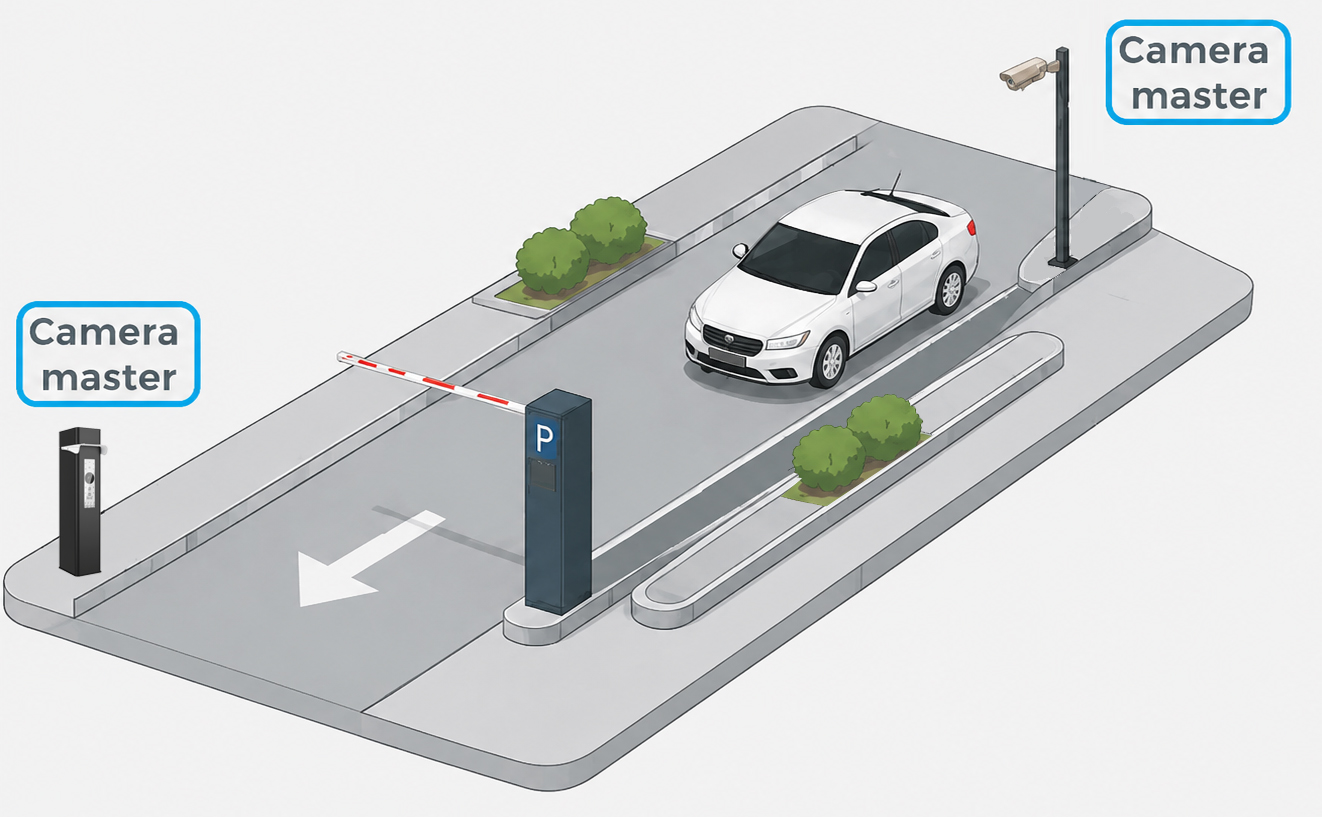
OCR7 + TwinPlate P2P Master/Master: 24/7 operational continuity
With OCR7 and the new TwinPlate P2P Master/Master architecture, Innova introduces a model specifically designed to maximize availability in demanding operational environments such as parking facilities and access control systems.
The combination of both technologies enables operators to:
The objective is not to prevent devices from failing. Devices fail. The objective is to ensure that the parking facility continues operating when they do.
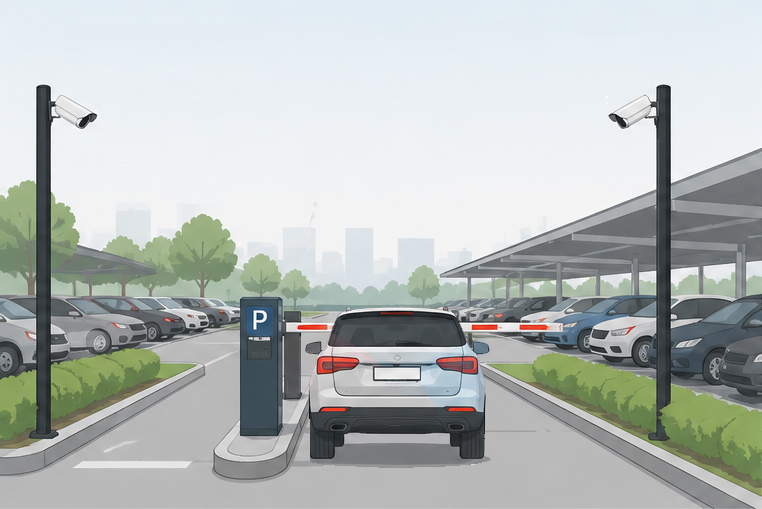
Resilience as an operational standard, not a competitive advantage
Parking operators are moving toward increasingly automated, connected, and ticketless models. In this context, operational continuity is no longer a competitive advantage—it is becoming a fundamental operational requirement.
For this reason, the resilience of an LPR system should not be measured by the number of cameras installed, but by its ability to maintain operations when one of those devices fails. That is the design philosophy behind OCR7 and TwinPlate P2P Master/Master.
The next level: Technological resilience and cybersecurity
Operational availability is one of the two pillars of any modern LPR system. The other is technological resilience in an increasingly connected and exposed environment. Software lifecycle management, updates, remote monitoring, and cybersecurity are now just as critical as hardware availability.
That is why OCR7 incorporates an architecture specifically designed to address these challenges. In the next article, we will explore how OCR7, SCAPv7, and Axis technology contribute to building safer, more resilient LPR systems that are better prepared for the demands of the parking industry.
Would your facility remain operational if a camera stopped responding right now?
If you would like to discover how to eliminate critical dependencies and improve the availability of your LPR infrastructure, contact our team and learn more about the new generation of OCR7 + TwinPlate P2P Master/Master solutions.

